Sơn La Hải Phòng Hà Nội Vinh Đà Nẵng Nha Trang Pleiku TP HCM
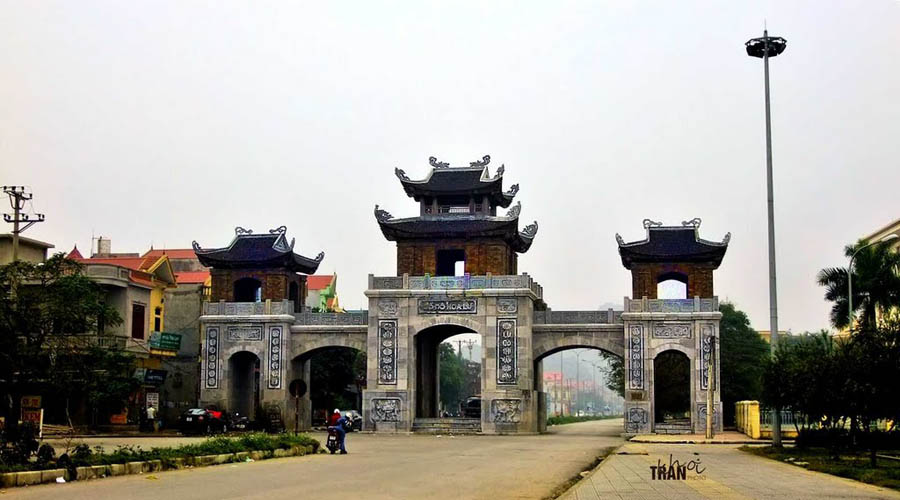
Hoa Lu was the capital of Dai Co Viet (name of Vietnam under the Dinh Dynasty ruled 968-980 and the Early Le Dynasty ruled 980-1009) nearly 10 centuries ago. The site is located in Truong Yen Commune, Hoa Lu District, Ninh Binh Province, about 100 km south of Hanoi.Hoa Lu is one of famous Ninh Binh destinations.
The mountains and sea combined to make Hoa Lu’s picturesque landscape. Hoa Lu lays in a flat valley surrounded by the Trang An lime stone mountains, which form a natural wall protecting the old citadel. The city’s northwest is bordered by the Hoang Long River, the tributaries of which run through the capital, cooling the weather within the city and serving as convenient waterways. The Royal Court was built in an area of 150 hectares in the eastern part of the capital while the western part served as a site to educate and protect children.
As the capital of the country for 41 years, Hoa Lu has many palaces, pagodas, tombs and pavilions that were built by different dynasties. One of the most popular pieces of architecture is the Bao Thien Tue Palace, which was plated with gold and silver. However many vestiges have been destroyed due to time and weather.
When King Ly Thai To moved the capital from Hoa Lu to Thang Long (now Hanoi) in 1010, two temples were built to dedicate to King Dinh Tien Hoang and his successor Le Dai Hanh. These two temples were first built in the 11th century and reconstructed in 1696.
The Temple of Dinh Emperor was built according to the style “Noi cong ngoai quoc” (internal attack with outside support) against a background of the main palace. The main palace had South Gate, lotus pond, human-made mountain, flower garden, inner triumphal arch, three sanctuaries, and a backcourt. At the sanctuaries, there are Long Sang (the stone pedestal of a royal throne) and twin whales. The sanctuaries are followed by Thieu Huong Temple to dedicate to the empire founders and heroes. The statues of Emperor Dinh Tien Hoang and his sons were built in the backcourt. The shapes of dragon, cloud, fairy, flowers, and leaves carved out of stone and wood for decoration in the temple are highly sophisticated.
In addition, the Hoa Lu site groups some beautiful pagodas, such as Ngan Xuyen Pagoda (below Ma Yen Mountain), Nhat Tru Pagoda (about 200 meters far from Temple of Le Emperor). This is appealing destination for pilgrims and tourists. Visitors to Hoa Lu certainly will be impressed by interesting stories about the Dinh Dynasty and Le Dynasty told by local tour guides with proud and respect of young generation towards their ancestors.
Coming to Hoa Lu visitors can attend traditional cultural festivals here, and the most important and largest of them is the Truong Yen Festival, which is held on the 10th day of the third lunar month. The festival is in memory of the Kings of the Dinh and Le dynasties. The festival lasts for three days with many traditional games and martial arts, reflecting local residents’ legends. When you travel Vietnam, you will find that Vietnam have many pagodas, and they have different history and beauty.
Address Add: No.48 Luong Ngoc Quyen st, Hoan Kiem dist, Hanoi, Vietnam. Tel: (84-4) 39261979 – 39263060, Fax: (84-4) 39260563 Email: vietnamfreedomtour@hn.vnn.vn , info@vietnamfreedomtour.com